On this page
The short answer
Yes, sharing unwashed or unprotected sex toys can transmit sexually transmitted infections (STIs), including HPV, HSV (herpes), chlamydia, gonorrhea, trichomoniasis, syphilis, and bacterial vaginosis (BV). Transmission occurs when bodily fluids or active skin-to-skin pathogens transfer between mucous membranes via the toy. You can eliminate sharing risks by rolling a fresh condom over insertable toys for each partner, switching barriers between anatomical zones, and thoroughly washing non-porous toys with antibacterial soap.
When considering sexually transmitted infection (STI) transmission, most public health messaging focuses almost exclusively on unbarrier penile-vaginal, penile-anal, or oral intercourse. This narrow definition leads many sexually active adults to assume that intimate devices like vibrators, dildos, and prostate massagers carry zero transmission risk.
The biological reality is straightforward: pathogens do not distinguish between human tissue and a sex toy. If an intimate device comes into contact with infected bodily fluids or active skin lesions and is immediately transferred to a partner without thorough washing or a new barrier, it functions as a direct transmission vector.
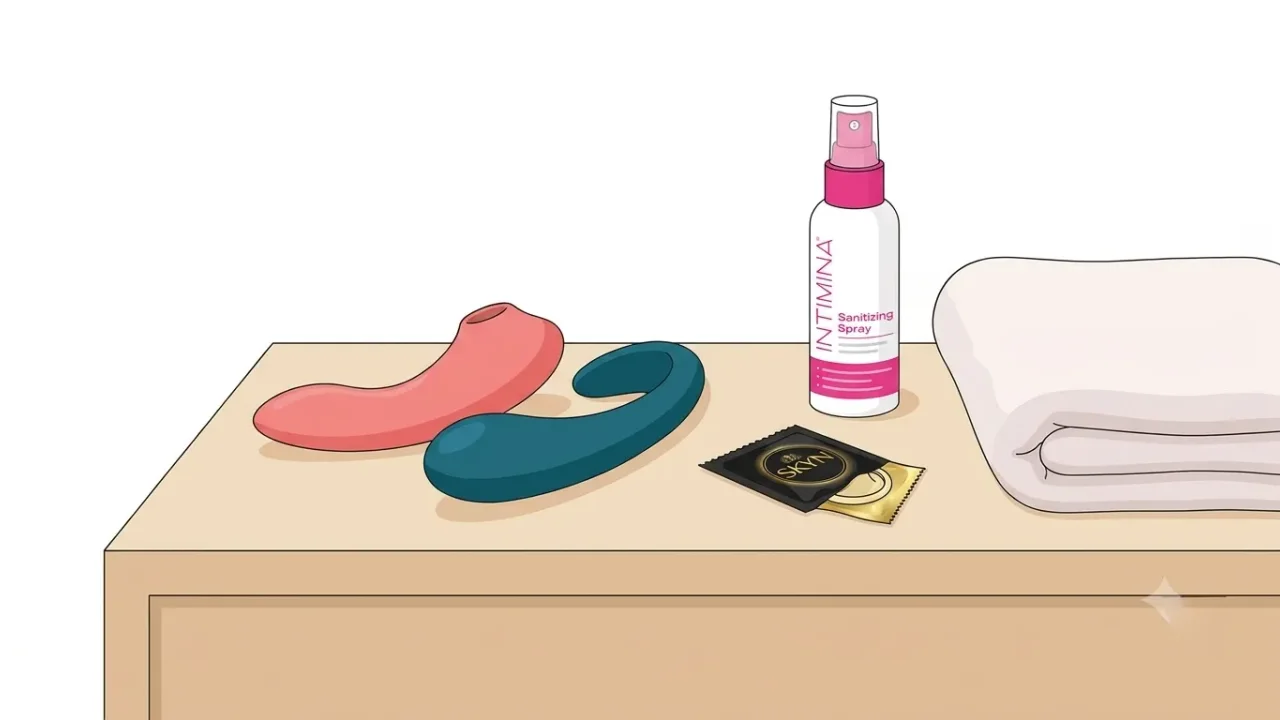
Understanding which infections can be passed through shared toys, how material porosity dictates safety, and how to implement simple barrier protocols allows partners to explore shared intimacy with complete confidence and zero medical risk.
How Pathogens Travel: The Mechanics of Fomite Transmission
In medical epidemiology, an inanimate object capable of carrying and transmitting infectious organisms is known as a fomite. Sex toys are exceptionally efficient fomites because they operate under conditions ideal for pathogen survival: warmth, humidity, bodily fluids, and direct contact with delicate mucous membranes.
When a toy is inserted into the vagina or rectum, its surface collects bodily secretions: cervical mucus, vaginal fluids, rectal secretions, and microscopic traces of blood. These secretions contain active viral loads, bacterial colonies, or microscopic protozoa.
If that toy is inserted into a partner’s body while still moist:
- The infected secretions are deposited directly against the partner’s mucous membranes.
- The mechanical friction of the toy can create micro-abrasions in the epithelial tissue, providing direct entry points into the bloodstream or cellular lining.
- Pathogens establish colonization without requiring any skin-to-skin or genital-to-genital contact between the two humans.
Pathogen Breakdown: What Can Be Transmitted via Toys?
Not all STIs share the same resilience outside the human body. Pathogens vary widely in their ability to survive on synthetic materials like silicone, glass, metal, and rubber.
| Pathogen / Condition | Organism Class | Surface Survival Capacity | Transmission Risk via Shared Toys | Primary Clinical Prevention |
|---|---|---|---|---|
| Human Papillomavirus (HPV) | Non-enveloped DNA virus | High (Hours to days on hard surfaces) | Extremely High; transmitted even without active visible warts | Condom sheathing; dedicated toys; complete washing |
| Herpes Simplex (HSV-1 & HSV-2) | Enveloped DNA virus | Moderate (Minutes to hours in moist fluid) | High; active shedding transfers easily via fluid contact | Avoid sharing during outbreaks; fresh condom barriers |
| Chlamydia & Gonorrhea | Mucosal bacteria | Moderate (Survives in moist secretions) | High; immediate transfer between vaginal or anal canals | New condom for each partner; antibacterial washing |
| Trichomoniasis | Parasitic protozoan | Moderate (Up to 45 minutes in warm secretions) | High; readily transferred between female partners | Barrier condoms; antibacterial soap and water |
| Bacterial Vaginosis (BV) | Bacterial dysbiosis | Moderate (Disrupts vaginal flora balance) | High; cross-inoculation of Gardnerella flora | Barrier condoms; separate toys; material sanitization |
| Hepatitis B & C | Bloodborne / Fluidborne virus | High (Hepatitis B survives up to 7 days dried) | Moderate to High; significant during anal toy use | Condom barriers; strict sterilization; no sharing |
| HIV (Human Immunodeficiency Virus) | Enveloped retrovirus | Low (Dies quickly upon drying/air exposure) | Low to Moderate; risk exists if fresh infected fluid or blood is transferred immediately | Never share unwashed toys; always sheath with condoms |
The Critical Role of Material Porosity
The physical composition of a sex toy dictates whether pathogens can be completely washed away or whether they become permanently embedded within the toy’s structure.
1. Non-Porous Materials (Medical-Grade Silicone, Borosilicate Glass, Stainless Steel)
Non-porous materials possess a continuous, microscopic surface seal. Bacteria and viruses cannot penetrate beneath the outer surface. When washed with warm water and antibacterial intimate cleanser, pathogens are thoroughly dislodged and eliminated. Furthermore, 100% pure silicone manual toys, borosilicate glass dildos, and medical stainless steel probes can be boiled in water for clinical sterilization.
2. Porous Materials (TPE, TPR, Jelly Rubber, PVC, Vinyl)
Porous materials contain microscopic open cavities within their polymer matrix. Microscopic pits trap fluid, dead epithelial cells, and bacterial colonies. Once an infection like HPV, chlamydia, or Gardnerella enters these pores, standard soap and water washing cannot reach inside the micro-cavities to eliminate them.
- Clinical Rule: Porous toys (TPE masturbators, jelly dildos) must never be shared directly between partners. If used with multiple partners, they must be completely sheathed in an unpunctured condom on every occasion.
The Three Gold Rules of Safe Partner Sharing
Sharing intimate devices with a partner can be deeply erotic and connective. You do not need to avoid sharing toys entirely; you simply need to follow these three non-negotiable hygiene protocols:
Rule 1: The Condom Barrier Protocol
The simplest, fastest, and most foolproof way to share an insertable toy is the condom method:
- Select an unexpired external condom (standard latex, polyisoprene, or polyurethane).
- Roll the condom smoothly down the shaft of the toy until it covers the entire insertable length.
- Add a generous amount of water-based lubricant to the outside of the condom.
- When switching partners, carefully roll off the used condom, throw it in the trash, wipe the toy surface, and roll on a brand-new condom.
Rule 2: Never Transition Between Anatomical Zones Without a Fresh Barrier
The human rectum naturally houses high concentrations of Escherichia coli (E. coli) and other enteric coliform bacteria. While harmless inside the bowel, transferring even microscopic quantities of E. coli into the vagina or urethra causes aggressive bacterial vaginosis (BV), severe urinary tract infections (UTIs), and potentially pelvic inflammatory disease (PID).
- Golden Rule: Any toy used for anal stimulation must never be inserted into the vagina without being thoroughly washed with antibacterial soap or having its condom barrier completely replaced.
Rule 3: Complete Wash Stations for Non-Porous Toys
If you choose not to use condoms on medical-grade silicone, glass, or steel toys:
- Wash the toy thoroughly between partners using warm running water and an antibacterial intimate toy cleanser containing benzalkonium chloride.
- Scrub all contact surfaces for at least 30 seconds.
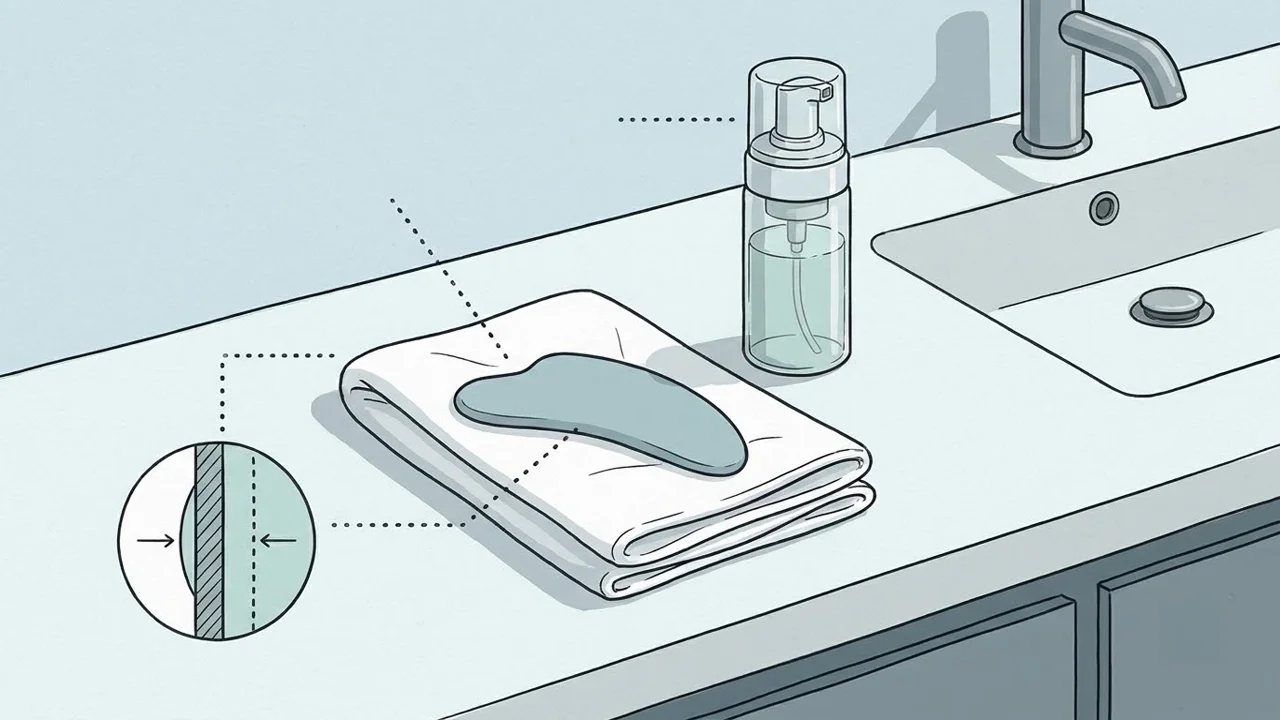
- Rinse cleanly and dry with a single-use paper towel or fresh microfiber cloth before handing the toy to your partner.
- If the toy is non-waterproof (such as a corded wand or battery vibrator), follow our clinical guide to cleaning non-waterproof sex toys safely.
Diagnostic Timeline: When to Seek Clinical Testing
If you have shared an unwashed or unbarriered toy with a partner whose STI status is unknown, or if you develop unexpected symptoms, seek clinical advice at a sexual health clinic or GP surgery.
Symptoms Requiring Medical Attention
- Unusual vaginal or penile discharge (thick, yellow/green, frothy, or foul-smelling).
- Burning or stinging sensations during urination.
- Pain deep in the pelvis during or after intercourse.
- Itching, burning, or redness around the vulva, vagina, or anus.
- Unexplained bumps, blisters, sores, or warts in the genital or perineal area.
Recommended Testing Windows
- Chlamydia & Gonorrhea (NAAT Swab or Urine Test): Accurate 2 weeks following exposure.
- Trichomoniasis & BV: Swab test can be conducted as soon as symptoms appear.
- HIV, Hepatitis B, and Syphilis (Blood Serology): Highly conclusive at 4 to 6 weeks, with full confirmation at 12 weeks.
Explore Related Clinical Guides and Safety Breakdowns
- Are Sex Toys Safe? What Beginners Should Know — Body-safe material standards, phthalate hazards, and introductory safety principles.
- What Does Body-Safe Silicone Actually Mean? — Clinical breakdown of medical vs food-grade silicone and chemical toxicity tests.
- How to Clean and Store Silicone Sex Toys Safely — Comprehensive boiling guidelines and antibacterial soap chemistry.
- Waterproof vs Water-Resistant Sex Toys Explained — Ingress protection ratings, submersion limits, and bath hygiene rules.
Quick check
What is the single most effective barrier method for preventing STI transmission when sharing an insertable sex toy between partners?
Roll a new condom over the toy for each partner, and discard and replace it before switching between partners or anatomical zones
Correct! Sheathing the toy with an unexpired latex or polyisoprene condom creates a physical, impermeable barrier that prevents bodily fluids and pathogens from contacting either user or the toy itself.
Rinse the toy briefly under warm tap water without soap before handing it to your partner
Incorrect. Warm water alone does not kill bacterial pathogens or viral particles like HPV and HSV, which easily transfer through residual surface moisture.