On this page
The short answer
BDSM is an umbrella term encompassing Bondage & Discipline (B&D), Dominance & Submission (D&s), and Sadism & Masochism (S&M). For beginners, practicing safe BDSM relies on three clinical pillars: explicit pre-negotiated consent (SSC / RACK frameworks), an unambiguous safe word system (such as the Traffic Light protocol), and dedicated post-scene aftercare to regulate emotional and hormonal drops.
For decades, mainstream pop culture painted BDSM as either a shadowy, menacing underworld or an aristocratic billionaire’s secret penthouse dungeon. Tabloid headlines treated leather restraints and blindfolds with sensationalist gasps.
The clinical and sociological reality is far more grounded, deeply affectionate, and astonishingly common.
At its heart, BDSM is simply the intentional, consensual exploration of sensation, power dynamics, trust, and psychological surrender. Far from being reckless or chaotic, high-level kink requires greater communication, mutual respect, and emotional maturity than almost any vanilla bedroom encounter.
Whether you are curious about introducing a soft silk blindfold to heighten touch, experimenting with light spanking, or exploring what it feels like to relinquish control for an hour, this comprehensive manual will guide you safely, sanely, and without shame.
TL;DR: The Core Acronyms & Philosophy
If you are encountering these terms for the first time, here is the clinical breakdown:
- B&D (Bondage & Discipline): Restricting physical movement (using soft cuffs, ties, or positioning) and establishing agreed rules or behavioral structures.
- D&s (Dominance & Submission): The psychological exchange of power, where one partner willingly surrenders decision-making authority to the other.
- S&M (Sadism & Masochism): Deriving sensual or emotional pleasure from delivering (sadism) or receiving (masochism) intense tactile sensations such as impact, temperature, or pinching.
The Two Guiding Ethics:
- SSC (Safe, Sane, and Consensual): The traditional community benchmark emphasizing risk minimization, sober awareness, and total agreement.
- RACK (Risk-Aware Consensual Kink): A modern evolution acknowledging that no physical activity is 100% devoid of risk; instead, informed adults assess those risks together before proceeding.
Bedroom Myth-Busting: The ‘Trauma’ Misconception
🛑 Bedroom Myth-Busting: The 'Broken Psychology' Lie
The Myth: "People who enjoy submission or physical impact play only do so because of unhealed childhood trauma or low self-esteem."
The Reality: Extensive psychological studies (including landmark research published in the *Journal of Sexual Medicine*) demonstrate that BDSM practitioners consistently score equal to or higher than non-kinky cohorts on measures of relationship satisfaction, emotional stability, subjective happiness, and lower anxiety. Relinquishing conscious control in a secure environment provides a therapeutic mental release from modern decision fatigue.
The Communication Engine: The Traffic Light System
In everyday life, “stop” means halt. But in erotic roleplay, words like “no”, “stop”, or “please” are frequently part of consensual dramatic dialogue. This is why having an unmistakable Safe Word is mandatory.
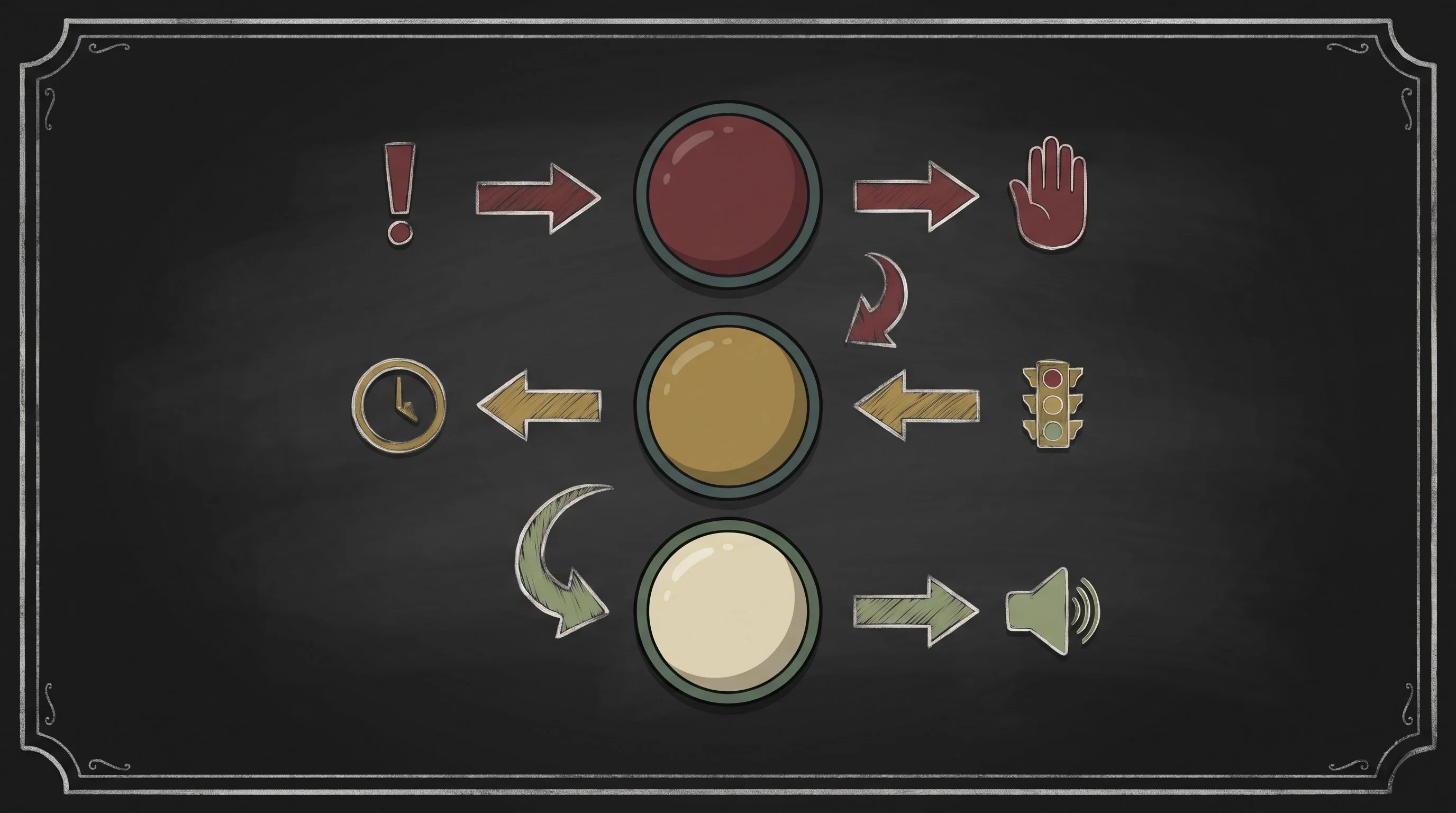
For beginners, the Traffic Light Protocol is the gold standard because it requires zero complex memory under heavy arousal:
- 🟢 GREEN: “Everything feels fantastic. I am comfortable with this pacing, pressure, and dynamic. Keep going.”
- 🟡 AMBER / YELLOW: “I am approaching my physical or emotional limit. Pause, slow down, adjust the pressure, or check in before going further.”
- 🔴 RED: “Full and immediate halt. Release all restraints, remove blindfolds, drop character, and transition into supportive care.”
The Non-Verbal Safe Signal
If someone is wearing a gag or sensory hood and cannot speak clearly, give them a small physical object to hold in their hand (such as a metal spoon, wooden clothespin, or squeaky dog toy). If they drop the object onto the floor, that serves as an immediate, non-negotiable RED.
The Beginner Starter Kit: 4 Low-Stakes Entry Points
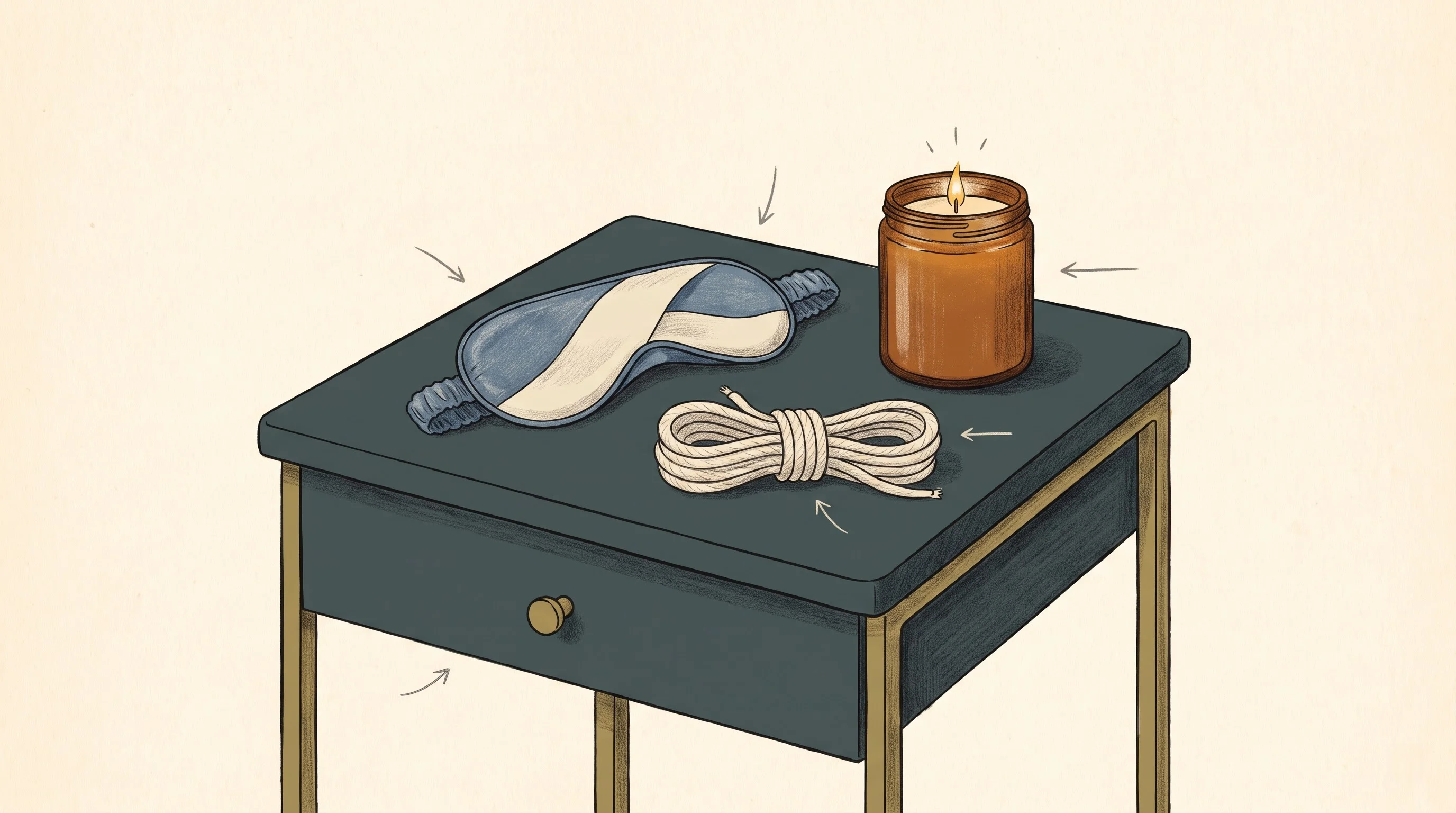
You do not need an arsenal of heavy leather or suspension rings to explore kink. Begin with soft, tactile, high-reward tools:
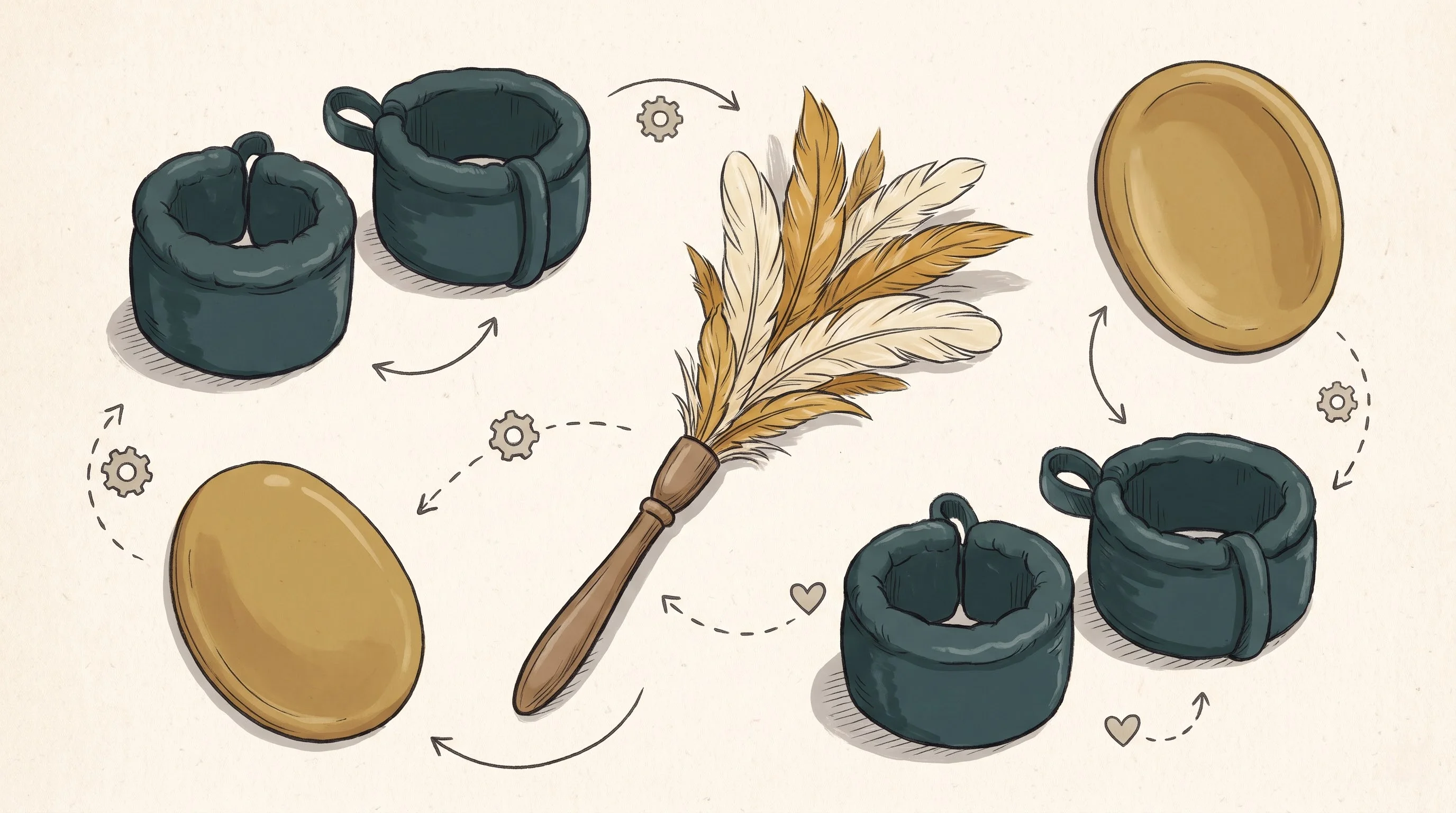
| Tool / Activity | Sensory Experience | Sexpert Beginner Tip |
|---|---|---|
| Silk Blindfold | Removes sight; dramatically heightens hearing, touch, and anticipation. | Keep room temperature comfortable; narrate your movements softly so the receiver does not startle. |
| Velvet / Padded Cuffs | Light wrist restriction; triggers the psychological thrill of surrender without nerve pinching. | Fasten loosely enough to slip two adult fingers under the band; never attach to rigid bedposts for first sessions. |
| Broad Silicone Paddle | Delivers 'thuddy', deep, endorphin-stimulating sensations over fleshy gluteal zones. | Avoid the lower back, kidneys, and tailbone; aim exclusively for the center of the buttocks. |
| Low-Temp Soy Massage Candle | Pleasant warmth and tingling skin contrast without burning or blistering. | Never use paraffin candles; always test a drop on your own wrist before dripping onto your partner. |
💡 Tap to Reveal: The Bondage Safety Rule
Whenever you use restraints, rope, or tape, **always keep a pair of emergency bandage shears (EMT shears) within arm's reach**. Never leave a restrained partner unattended in a room, even for 30 seconds to fetch a glass of water.
Anatomy 101: The Endorphin Rush & ‘Sub Space’
Why does light impact or restraint feel intoxicating rather than purely painful? The secret lies in neurochemistry.
When the body experiences controlled, expected tactile stimulation in a trusting setting, the brain’s pituitary gland releases a surge of:
- Endorphins: Natural opioid peptides that block pain perception and produce profound euphoria.
- Adrenaline & Noradrenaline: Sharpen sensory focus and increase heart rate.
- Oxytocin: The ‘bonding hormone’ that cements intimate trust between partners.
This neurochemical cocktail induces an altered psychological state known in the kink community as Sub Space (or Top Space for the dominant partner). Practitioners describe it as a warm, floaty, meditative calm where daily anxieties evaporate.
Aftercare: Preventing the Post-Scene Drop
What happens after a scene is just as important as what happens during it.
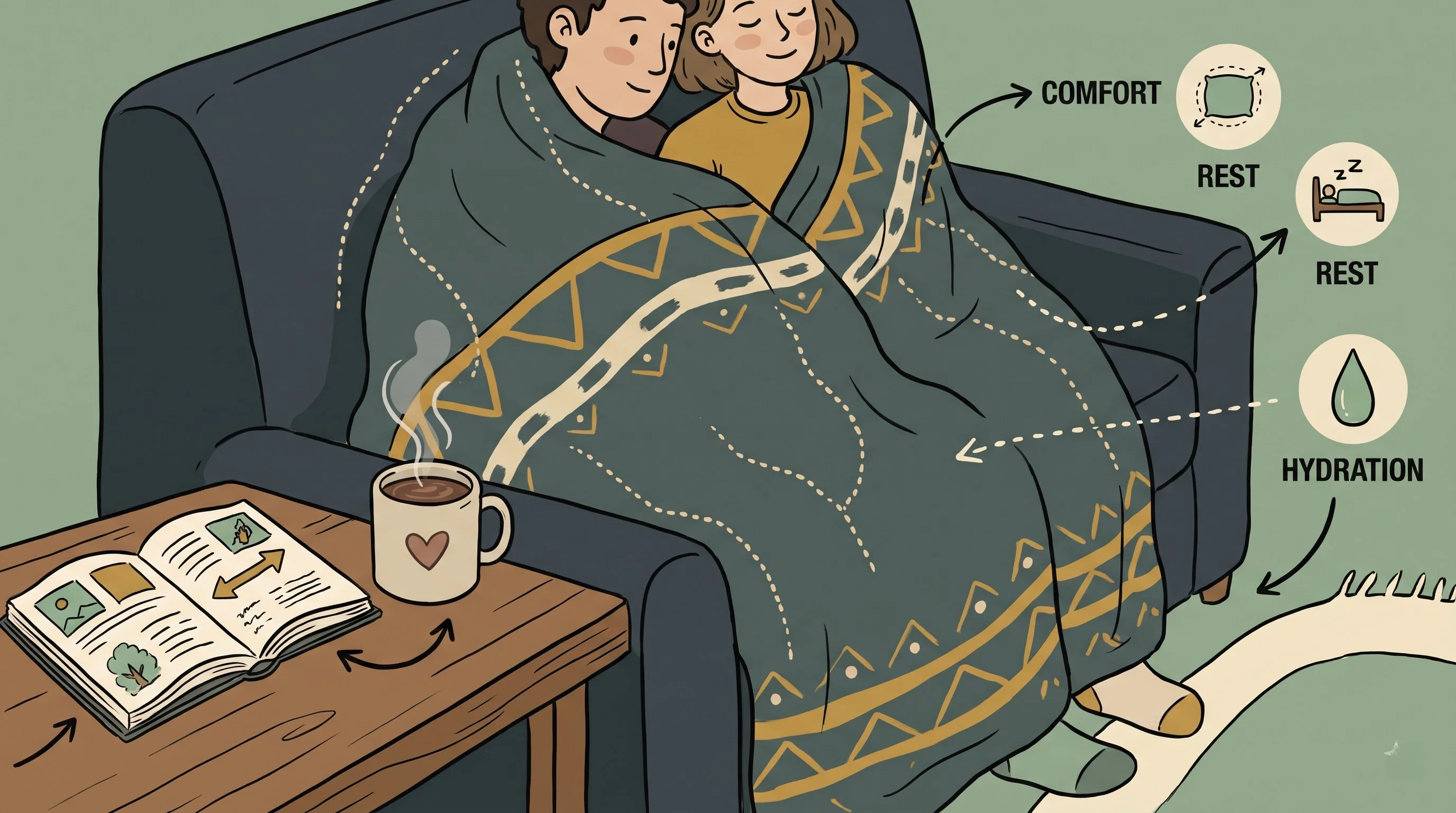
As the adrenaline and endorphin flood drains from the bloodstream over the subsequent 30 to 60 minutes, the nervous system experiences a sharp crash. Without proactive aftercare, this can lead to ‘Sub Drop’—feelings of sudden sadness, chills, vulnerability, or tears.
The 4 Pillars of Clinical Aftercare:
- Physical Warmth: Cover the receiver in a thick fleece blanket or duvet; vasodilation can cause sudden shivering.
- Glycemic & Fluid Recovery: Offer a glass of water, coconut water, or a warm cup of sweet herbal tea paired with a high-carb snack (chocolate, banana, or biscuits) to replenish spent glycogen stores.
- Gentle Touch & Verbal Affirmation: Hold each other, offer cuddles, and explicitly praise each other for their vulnerability and trust.
- De-Roleing Ritual: Verbally confirm that the scene has concluded and you are back to your everyday dynamic as equal, loving partners.
Interactive Check: Where Is Your Kink Curiosity?
Which aspect of kink feels most enticing to explore first? Tap your match:
Related Guides & Further Reading
Quick check
What is the primary clinical and psychological purpose of 'aftercare' following an intense BDSM or kink scene?
To stabilise physiological hormones (adrenaline and endorphins) as they drop, preventing the emotional vulnerability known as 'sub drop' or 'top drop'
Spot on! Intense kink releases a massive flood of neurochemicals; as they plummet, warm blankets, hydration, and emotional validation safely re-ground both partners.
To negotiate new boundaries and contracts for future bedroom sessions immediately
Negotiation should occur prior to scenes when minds are objective; immediately following intense play, emotional grounding and physical warmth take precedence.